
Position, Reference Frames, and Displacement
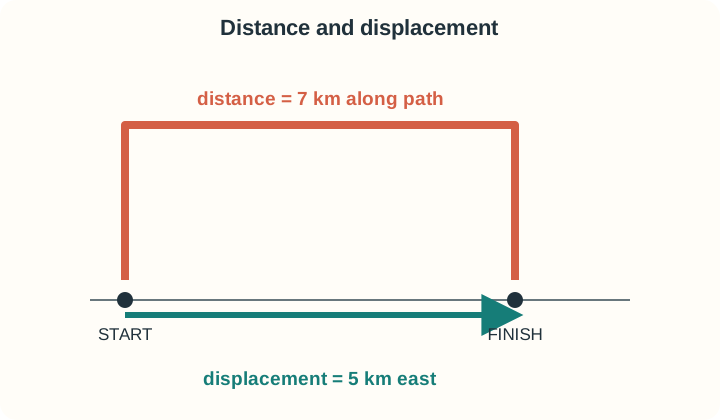
Define position and distinguish path length from change in position.
Reference Frames and Coordinates
Objective: Choose an origin and positive direction before describing motion.
A position is an object’s location relative to an origin in a specified coordinate system and reference frame. One-dimensional positions can be positive or negative according to the chosen direction; a negative coordinate does not mean a negative distance. Motion is described relative to a frame: a passenger can be stationary with respect to a moving train yet move relative to the ground. The choice of origin or positive direction changes numerical coordinates, but not the underlying physical event. Time must also be specified to compare positions. A position–time record is a model of the tracked object, often approximating it as a point when its size is not relevant.
Worked examples
Try itA passenger sits on a moving train. Relative to the train seat, the passenger is what?Show answer
At rest. Motion depends on the specified reference frame.
Swipe sideways to move between sections
You finished the reading!
Lock it in with a few practice questions, then move on to the next lesson.